
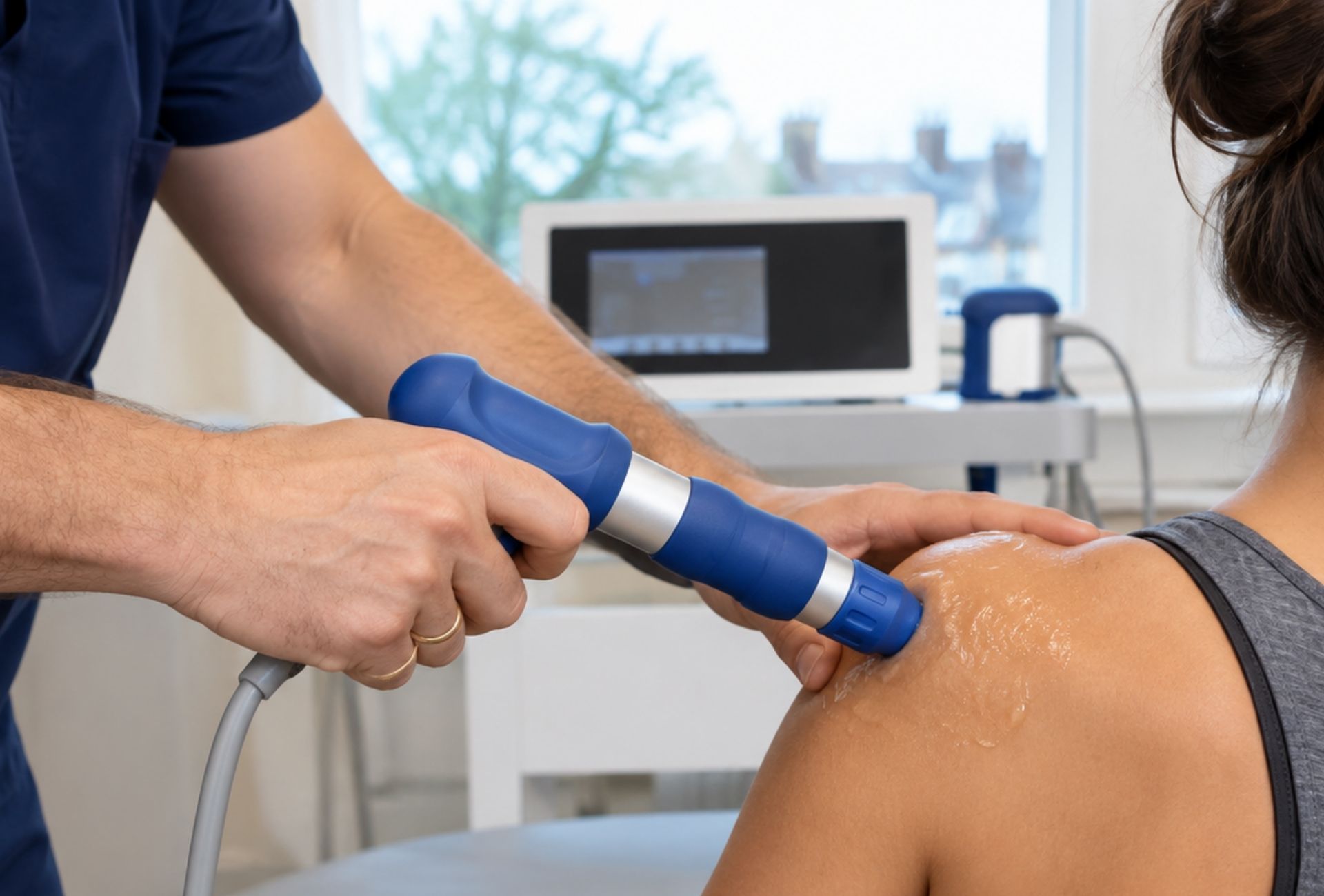
Chronic shoulder pain can make everyday activities more difficult. Reaching overhead, lifting objects, getting dressed, sleeping on the affected side, exercising, or performing repetitive movements may become uncomfortable when shoulder pain continues for weeks or months.
Shoulder pain can have many causes, including rotator cuff problems, tendinitis, bursitis, arthritis, injuries, repetitive strain, and frozen shoulder. The right treatment depends on the underlying cause, how long symptoms have been present, and how much the condition affects movement and daily activities.
One non-surgical treatment option some people explore is shockwave therapy. Also called extracorporeal shockwave therapy (ESWT), the treatment uses mechanical sound waves directed toward a targeted area. It is commonly used in the treatment of certain chronic soft-tissue conditions.
At First Stop Chiropractic in Fenton, Missouri, shockwave therapy is available as part of a personalized approach to musculoskeletal pain and recovery.
The shoulder is a complex joint that depends on muscles, tendons, ligaments, bones, and other structures to provide stability and movement.
The rotator cuff is particularly important. It consists of four muscles and their tendons that help stabilize the shoulder and move the arm. Repetitive overhead activity, heavy lifting, aging, and injuries can contribute to rotator cuff problems.
Common causes of chronic shoulder pain may include:
Rotator cuff tendinopathy
Rotator cuff tears
Tendinitis
Bursitis
Frozen shoulder
Arthritis
Repetitive-use injuries
Shoulder impingement
Previous shoulder injuries
Symptoms may include aching, stiffness, weakness, tenderness, reduced range of motion, or pain when raising the arm.
Mayo Clinic notes that conservative treatments such as rest, ice, and physical therapy can sometimes help people recover from rotator cuff injuries, depending on the severity of the condition.
Shockwave therapy uses acoustic or mechanical waves to deliver energy to a targeted area of the body.
Unlike surgery, it does not require an incision. The treatment is performed externally, with the device positioned over the affected area.
The goal is to stimulate a response in the treated tissue and support the body’s natural recovery processes. Shockwave therapy has been studied for several chronic tendon and soft-tissue conditions, including some shoulder disorders.
It is important to understand that shockwave therapy is not appropriate for every type of shoulder pain. The treatment should be considered based on the individual’s condition and overall treatment goals.
Shockwave therapy may be particularly useful when shoulder pain involves certain chronic tendon conditions.
Research has investigated ESWT for rotator cuff tendinopathy, with some studies reporting improvements in pain and shoulder function. A 2024 systematic review and meta-analysis of 16 randomized controlled trials involving 1,093 patients found evidence suggesting ESWT may improve pain and function in people with rotator cuff tendinopathy, although the researchers described the evidence as limited.
Another systematic review focusing specifically on noncalcific rotator cuff tendinopathy found that shockwave therapy produced a small short-term improvement in pain compared with sham treatment, but did not demonstrate clear superiority for longer-term pain or shoulder function.
This means shockwave therapy may help some patients, but it should not be presented as a guaranteed cure.
Rotator cuff tendinopathy is a common source of shoulder pain.
The condition can develop when the tendons of the rotator cuff are repeatedly stressed or overloaded. People who frequently perform overhead activities may be more likely to develop symptoms.
Common symptoms may include:
Pain when raising the arm
Shoulder tenderness
Weakness
Pain during overhead activities
Difficulty sleeping on the affected shoulder
Reduced ability to perform certain movements
Mayo Clinic explains that repetitive overhead activity and heavy lifting can irritate or weaken rotator cuff tendons.
Shockwave therapy may be considered as part of a broader treatment plan for certain patients with persistent tendon-related shoulder pain.
Calcific tendinitis occurs when calcium deposits develop within a shoulder tendon. It can cause significant pain and may restrict shoulder movement.
Shockwave therapy has been studied extensively for calcific shoulder conditions. The mechanical energy delivered during treatment may be used to target the affected area.
However, treatment selection should depend on the patient’s specific diagnosis. Imaging and professional evaluation may sometimes be necessary to determine whether calcium deposits or another condition are contributing to symptoms.
Frozen shoulder, also called adhesive capsulitis, can cause significant stiffness and restricted shoulder movement.
A systematic review and meta-analysis of 20 studies found that extracorporeal shockwave therapy used alongside other interventions may improve immediate and short-term pain and function in people with frozen shoulder. However, the researchers noted significant variation between studies, particularly for longer-term outcomes.
This suggests shockwave therapy may have a role as an adjunctive treatment, but it should generally be considered alongside appropriate rehabilitation and other recommended care rather than as a stand-alone solution.
During treatment, the provider positions the shockwave applicator over the targeted area.
The device delivers controlled mechanical waves into the tissues. The intensity and treatment area can be adjusted according to the condition and the patient’s tolerance.
Patients may feel tapping, pressure, or discomfort during treatment. The experience can vary depending on the area being treated and the severity of the condition.
Because chronic shoulder pain can have different causes, the treatment approach should be individualized.
Some patients experience mild to moderate discomfort during shockwave therapy, particularly when the treatment is applied to a sensitive or irritated area.
The intensity can often be adjusted to make treatment more tolerable.
Patients should communicate with their provider if treatment becomes excessively uncomfortable.
Shockwave therapy is non-invasive, but that does not mean it is appropriate for everyone. A professional assessment can help determine whether it is a reasonable option.
Pain and stiffness can cause people to avoid using their shoulder normally. Over time, this may affect strength, mobility, and confidence with movement.
Reducing pain may make it easier for some patients to participate in exercises and rehabilitation designed to restore shoulder function.
Research involving rotator cuff tendinopathy has found potential improvements in shoulder function following ESWT, although results have varied between studies.
For this reason, shockwave therapy may be most useful when incorporated into a comprehensive plan that also addresses mobility, strength, posture, and activity levels.
Shockwave therapy does not replace appropriate exercise and rehabilitation.
Mayo Clinic identifies physical therapy and exercises designed around the specific shoulder problem as important components of treatment for many rotator cuff conditions.
Depending on the condition, an exercise program may focus on:
Restoring range of motion
Strengthening the shoulder
Improving stability
Supporting proper movement patterns
Gradually returning to activities
Combining appropriate rehabilitation with pain-management strategies may help patients work toward improved function.
Treatment is only one part of managing chronic shoulder pain. Daily habits can also influence symptoms.
Consider:
Avoiding repetitive overhead activity when it aggravates symptoms
Taking breaks during repetitive work
Using proper lifting techniques
Maintaining appropriate posture
Following recommended exercises
Avoiding prolonged inactivity
Gradually returning to activities after an injury
The goal is not necessarily to avoid using the shoulder completely. Appropriate movement can be important for maintaining function, but activities should be adjusted according to the individual’s condition.
Persistent shoulder pain should not simply be ignored.
Consider a professional evaluation if:
Shoulder pain continues for several weeks
Pain interferes with sleep
You have difficulty raising your arm
Shoulder movement becomes limited
You notice weakness
Pain interferes with work or exercise
Symptoms continue despite rest
Pain repeatedly returns
Mayo Clinic recommends evaluation for shoulder pain that persists or makes it difficult to use the arm normally.
A proper evaluation can help determine whether shockwave therapy is appropriate or whether another treatment should be considered.
Some shoulder symptoms may indicate a medical emergency.
Seek immediate medical attention if shoulder pain occurs with:
Severe chest pain
Difficulty breathing
Sweating
Dizziness
Sudden weakness
Severe injury
Visible deformity
Inability to move the arm after an injury
Shoulder pain associated with chest symptoms can sometimes indicate a serious cardiovascular problem and should not be assumed to be a musculoskeletal condition.
1. Can shockwave therapy help chronic shoulder pain?
Shockwave therapy may help certain types of chronic shoulder pain, particularly some tendon-related conditions. Research suggests potential benefits for pain and function, although results vary.
2. Is shockwave therapy non-surgical?
Yes. Shockwave therapy is an external, non-invasive treatment that does not require an incision.
3. Can shockwave therapy help rotator cuff problems?
It may help some patients with rotator cuff tendinopathy. Current research suggests potential improvements in pain and function, although evidence is not conclusive for every type of rotator cuff condition.
4. Can shockwave therapy help frozen shoulder?
Research suggests shockwave therapy may provide short-term improvements in pain and function when used alongside other treatments for frozen shoulder.
5. Is shockwave therapy painful?
Some patients feel tapping, pressure, or discomfort during treatment. Treatment intensity can generally be adjusted according to tolerance.
6. How many treatments will I need?
The number of treatments varies depending on the condition, symptoms, treatment response, and individual goals. A provider can recommend an appropriate treatment plan after evaluation.
7. Can I exercise while receiving shockwave therapy?
Depending on the underlying condition, exercise and rehabilitation may be an important part of treatment. Activities should be appropriate for the patient’s symptoms and recovery stage.
8. Does First Stop Chiropractic offer shockwave therapy?
Yes. First Stop Chiropractic offers shockwave therapy as part of its approach to musculoskeletal care. Visit the clinic’s services page to learn more.
9. Can shockwave therapy replace surgery?
Not necessarily. Shockwave therapy is a non-surgical option, but some serious or severe shoulder conditions may require medical or surgical treatment.
10. How can I learn more about treatment options?
You can visit the First Stop Chiropractic blog for additional educational information or explore the clinic’s conditions they treat.
Chronic shoulder pain can interfere with sleep, work, exercise, and everyday movement. Because shoulder pain can result from many different conditions, identifying the underlying cause is an important first step.
Shockwave therapy may be a useful non-invasive option for certain chronic shoulder conditions, particularly some forms of rotator cuff tendinopathy and other tendon-related problems. Research has shown potential benefits for pain and function, although results vary and evidence is stronger for some conditions than others.
Shockwave therapy should not be viewed as a guaranteed cure or a replacement for appropriate rehabilitation. Depending on the condition, treatment may be combined with exercise, mobility work, activity modification, chiropractic care, or other conservative approaches.
If chronic shoulder pain is affecting your daily activities, a professional evaluation can help determine what may be causing your symptoms and whether shockwave therapy is an appropriate option.
If persistent shoulder pain is limiting your movement, sleep, work, or exercise, First Stop Chiropractic can help you explore personalized treatment options.
Learn more about the clinic’s services or visit the First Stop Chiropractic website.
You can also contact First Stop Chiropractic to discuss your symptoms and schedule an appointment.
First Stop Chiropractic
📍 Address: 36 Fenton Plaza, Fenton, MO 63026 United States
📞 Phone Number: (314) 574-1907
🌐 Website: firststopchiropractic.com
