
Pain is one of the most common reasons people seek healthcare treatment. Whether it comes from injury, poor posture, aging, repetitive strain, or chronic conditions, pain can significantly limit mobility, reduce productivity, and negatively impact overall quality of life. For many individuals, it becomes a daily challenge that affects work performance, sleep quality, and even emotional well-being.
While medications and surgery have long been standard treatment options, many patients today are actively seeking safe, non-invasive, and drug-free alternatives that work with the body’s natural healing processes rather than simply masking symptoms. This shift in healthcare preferences has led to the growing interest in modern regenerative therapies that support long-term recovery.
One of the most advanced and effective options available in modern chiropractic and rehabilitation care is laser therapy for pain relief, also known as low-level laser therapy (LLLT) or cold laser therapy. This innovative treatment uses targeted light energy to stimulate cellular activity, reduce inflammation, and promote tissue repair without discomfort or downtime.
This approach is gaining widespread popularity because it addresses pain at its source—at the cellular level—helping the body repair itself faster and more efficiently. At First Stop Chiropractic, patients receive personalized laser therapy treatments designed to support healing, improve mobility, and enhance overall quality of life through safe and evidence-based care.
Laser therapy is a non-invasive medical treatment that uses specific wavelengths of light to stimulate healing in damaged tissues.
Unlike surgical lasers that cut or burn tissue, low-level laser therapy uses low-intensity light energy that does not produce heat, making it safe, painless, and comfortable for patients.
This treatment is part of a scientific process known as photobiomodulation, which refers to how light energy interacts with cells to enhance biological function.
In simple terms:
Laser therapy helps your body heal itself by “charging” your cells with light energy.
When applied to injured or inflamed areas:
Light penetrates the skin
Cells absorb the energy
Cellular activity increases
Healing processes are accelerated
According to research published in medical literature, photobiomodulation can significantly improve tissue repair and reduce inflammation at the cellular level
To understand why laser therapy is effective, it helps to look at how it works inside the body at a cellular level. When low-level laser light is applied to injured or inflamed tissue, the energy penetrates the skin and is absorbed by the mitochondria within cells. This stimulates increased production of ATP, which is the primary source of energy for cellular repair and regeneration. As a result, cells function more efficiently, healing processes are accelerated, and inflammation is reduced. Blood circulation also improves, allowing oxygen and nutrients to reach damaged tissues more effectively, supporting faster recovery and pain relief.
1. Cellular Energy Boost (ATP Production)
Cells in your body require energy to repair damage. This energy is produced in the mitochondria in the form of ATP (adenosine triphosphate).
Laser therapy stimulates mitochondria, increasing ATP production, which helps:
Repair damaged tissues faster
Improve cellular function
Enhance regeneration
2. Reduced Inflammation
Inflammation is a natural response to injury, but excessive or chronic inflammation leads to pain and delayed healing.
Laser therapy helps:
Reduce inflammatory markers
Calm irritated tissues
Decrease swelling
3. Improved Blood Circulation
Better circulation means more oxygen and nutrients reach injured tissues.
This results in:
Faster recovery
Improved tissue oxygenation
Removal of waste products
4. Nerve Function Modulation
Laser therapy can also help regulate nerve activity, reducing pain signals sent to the brain. This is especially beneficial for chronic pain conditions.
Laser therapy is widely used in chiropractic and rehabilitation clinics because it can address a broad range of conditions affecting muscles, joints, nerves, and soft tissues. It is commonly applied for back pain, neck pain, arthritis, sports injuries, tendonitis, and ligament strains. The treatment is especially valuable for reducing inflammation, easing muscle tension, and supporting faster tissue repair without invasive procedures. Because it works at the cellular level, it can also help improve mobility and reduce chronic pain symptoms over time. Its versatility and non-invasive nature make it a popular option for patients seeking safe, drug-free pain management and recovery support.
Musculoskeletal Pain Conditions
Lower back pain
Neck pain
Shoulder stiffness
Knee pain
Hip pain
Joint inflammation
Soft Tissue Injuries
Muscle strains
Ligament sprains
Tendonitis
Overuse injuries
Sports injuries
Chronic Pain Conditions
Sciatica
Arthritis-related pain
Fibromyalgia symptoms
Neuropathy discomfort
Post-Surgical Recovery Support
Reduced scar tissue formation
Improved tissue healing
Faster rehabilitation progress
Clinical studies show positive outcomes in reducing pain and improving function, especially when combined with rehabilitation programs
Laser therapy is becoming a preferred treatment option for many patients due to its wide range of benefits in pain management and tissue healing. It offers a non-invasive, drug-free approach that supports the body’s natural recovery processes without the risks or downtime associated with surgery or long-term medication use. Patients appreciate that treatments are quick, comfortable, and typically painless, while still delivering noticeable improvements in inflammation reduction and mobility. Laser therapy can be used for both acute injuries and chronic conditions, making it a versatile option in chiropractic and rehabilitation care focused on long-term wellness and improved quality of life.
✔ Drug-Free Pain Relief
Laser therapy provides pain relief without the need for medication, reducing dependency on painkillers.
✔ Completely Non-Invasive
No needles, no incisions, and no downtime required.
✔ Painless Treatment Experience
Most patients feel only mild warmth or no sensation at all during treatment.
✔ Reduces Inflammation Naturally
Helps the body regulate its own healing response.
✔ Speeds Up Recovery
Enhances tissue regeneration at the cellular level.
✔ Safe for Most Patients
When performed by trained professionals, side effects are minimal to none.
✔ Quick Treatment Sessions
Sessions usually last between 5 and 15 minutes depending on the condition.
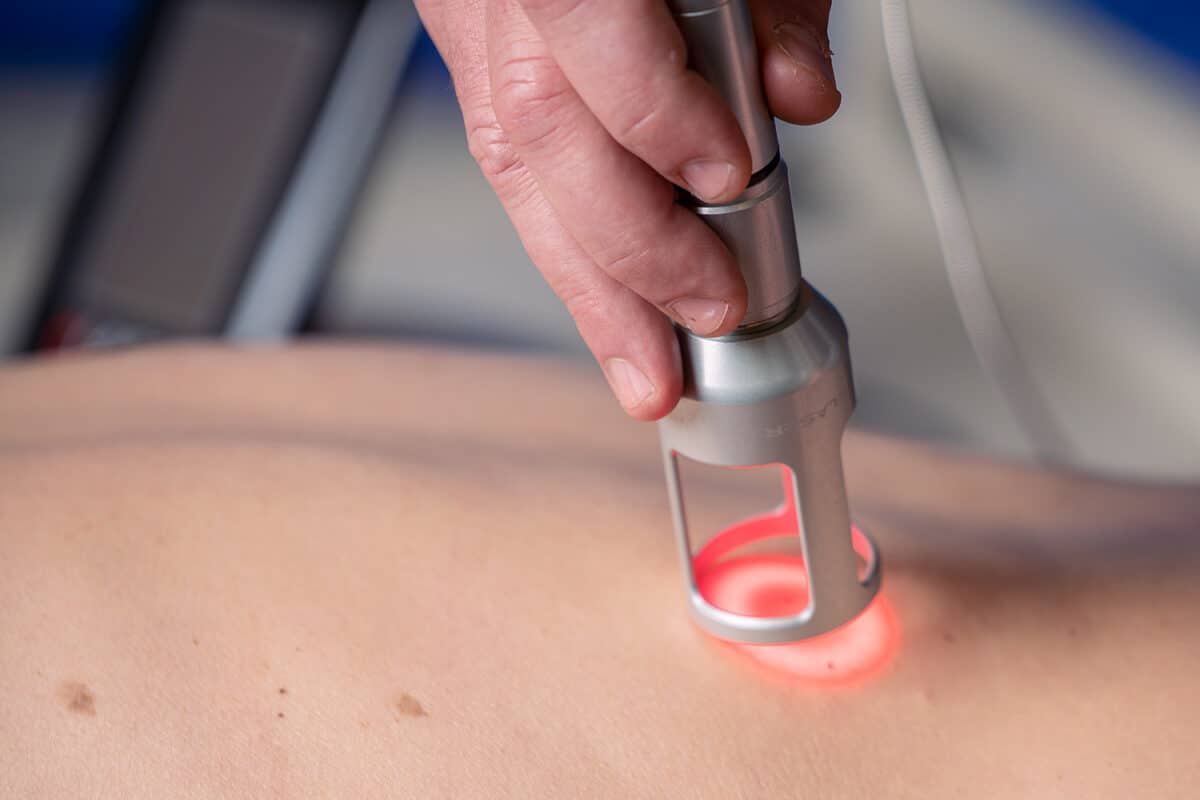
Patients often wonder what the experience feels like. Fortunately, laser therapy sessions are simple and comfortable from start to finish. During treatment, a trained provider applies a handheld laser device directly over the affected area while the patient remains fully relaxed. Most individuals feel little to no sensation at all, although some may notice a gentle warmth or light tingling. The session is non-invasive, requires no anesthesia, and involves no recovery time afterward. Patients can immediately return to normal daily activities. Because of its ease and comfort, laser therapy is often well tolerated even by those new to pain treatment options.
Step 1: Initial Evaluation
A chiropractor or healthcare provider assesses the affected area and determines whether laser therapy is appropriate.
Step 2: Preparation
The treatment area is exposed, and the laser device is positioned over the skin.
Step 3: Application of Light Energy
The device emits low-level laser light for several minutes. The light penetrates deep into tissues without causing heat or discomfort.
Step 4: Completion of Session
Once the session is complete, patients can immediately return to normal activities.
There is:
No recovery time
No restrictions
No discomfort afterward
Laser therapy is widely considered safe when used by trained professionals who follow proper treatment protocols. It is a non-invasive procedure that uses low-level light energy, meaning it does not cut, burn, or damage tissue. Because of its gentle nature, side effects are rare and typically minimal when they do occur. Most patients tolerate the treatment very well, even with repeated sessions. Safety measures are always taken to protect sensitive areas such as the eyes, and providers carefully adjust settings based on each patient’s condition. This makes laser therapy a reliable option for managing pain and supporting natural healing processes.
Because it uses low-intensity light:
It does not damage skin
It does not generate heat
It does not cause burns or cuts
Safety considerations:
Laser therapy is generally avoided in:
Direct eye exposure
Active cancer regions
Certain pregnancy-related areas (precautionary)
Scientific reviews indicate that adverse effects are rare when proper protocols are followed
The number of sessions varies depending on the condition being treated, as well as the severity, duration, and overall health of the patient. Acute injuries such as mild strains or recent inflammation may require only a few sessions to achieve noticeable improvement. However, chronic or long-standing conditions like arthritis, nerve pain, or degenerative issues often require a more extended treatment plan to achieve lasting results. Providers typically assess progress throughout the therapy and adjust the number of sessions accordingly. Consistency is important, as repeated treatments help build cumulative healing effects and support better long-term outcomes for pain relief and tissue recovery.
General guidelines:
Mild injuries: 4–8 sessions
Moderate conditions: 8–12 sessions
Chronic pain: 12–20+ sessions
Some patients experience improvement within the first few visits, while others require ongoing treatment for optimal results.
Consistency is important for long-term healing.
Chiropractic clinics often integrate laser therapy into treatment plans because it enhances overall healing outcomes when combined with other forms of care. It works well alongside chiropractic adjustments, soft tissue therapy, and rehabilitation exercises by addressing inflammation and cellular repair at the source of pain. This combination approach allows providers to treat both structural alignment issues and underlying tissue damage more effectively. As a result, patients may experience improved mobility, reduced pain, and faster recovery times. Laser therapy also helps prepare tissues for manual treatments, making chiropractic adjustments more comfortable and potentially more effective as part of a comprehensive care plan.
It is commonly combined with:
Chiropractic spinal adjustments
Soft tissue therapy
Stretching and rehabilitation exercises
Postural correction programs
This combination approach helps address both:
Structural alignment issues
Cellular-level inflammation and repair
Laser therapy may be suitable if you:
Experience chronic or recurring pain
Want a non-surgical treatment option
Prefer drug-free pain relief
Are recovering from injury or surgery
Have inflammation-related conditions
Want to improve mobility and function
It is especially beneficial for individuals who have not responded well to conventional treatments alone.
1. Is laser therapy painful?
No. It is completely painless. Most patients feel nothing or a mild warming sensation.
2. How quickly does laser therapy work?
Some patients notice improvement after 1–3 sessions, while others may require several weeks of treatment.
3. Is laser therapy scientifically proven?
Yes. Research supports its effectiveness in reducing pain and inflammation and improving tissue healing
4. Can laser therapy replace surgery?
No. It is a conservative treatment option designed to support healing and reduce symptoms, not replace surgical intervention when necessary.
5. Are there any side effects?
Side effects are rare when performed correctly by trained professionals.
6. Can it be used with other treatments?
Yes. It is often combined with chiropractic care and physical therapy for better outcomes.
Laser therapy for pain relief represents a powerful advancement in modern healthcare, offering a scientifically grounded approach to supporting the body’s natural healing processes. By using low-level light energy to stimulate cellular repair, it enhances mitochondrial activity, increases ATP production, and promotes faster tissue regeneration. This helps the body heal more efficiently while also reducing inflammation and easing pain at its source.
It is safe, non-invasive, and effective for a wide range of musculoskeletal and nerve-related conditions, including back pain, neck pain, arthritis, sports injuries, and neuropathic discomfort. Because it does not involve surgery, injections, or long recovery periods, many patients find it to be a comfortable and convenient option for ongoing care.
For many individuals, laser therapy offers a meaningful alternative or valuable complement to traditional pain management methods such as medication or physical therapy. As more research continues to support its benefits, laser therapy is becoming an increasingly essential tool in modern chiropractic and rehabilitation care focused on long-term recovery and improved quality of life.
If you are struggling with pain that limits your daily life, laser therapy may be the solution you have been looking for.
Take the next step toward recovery and discover a safe, drug-free way to support your healing process.
📍 Schedule your consultation today and start your journey toward better mobility and less pain.
📍 Address: 36 Fenton Plaza, Fenton, MO 63026, United States
📞 Main Line: (314) 574-1907
📞 Alternate Line: (314) 750-7361
🌐 Website: https://firststopchiropractic.com
