
Chronic neck pain can make everyday activities more difficult. Turning your head, working at a computer, driving, exercising, or finding a comfortable sleeping position may become challenging when neck discomfort continues for weeks or months. Some people may also experience stiffness, muscle tension, headaches, or pain that travels into the shoulders and arms.
Neck pain can have many possible causes, including muscle strain, poor posture, injuries, arthritis, age-related changes, disc problems, and irritated nerves. Mayo Clinic notes that neck pain may develop from everyday strain as well as conditions affecting the joints, discs, and nerves of the cervical spine.
For people interested in non-surgical approaches, spinal decompression is one option that may be considered for certain types of chronic neck pain. The treatment uses controlled traction to gently unload portions of the spine. At First Stop Chiropractic in Fenton, Missouri, spinal decompression is available as part of a personalized approach to chiropractic and musculoskeletal care.
Neck pain can range from mild soreness and stiffness to persistent discomfort that affects daily activities. When symptoms continue for an extended period or repeatedly return, they may be described as chronic or persistent neck pain.
Common symptoms may include:
Aching or soreness in the neck
Neck stiffness
Reduced range of motion
Muscle tightness
Pain between the neck and shoulders
Headaches associated with neck discomfort
Pain extending into the shoulders or arms
Tingling or numbness in an arm or hand
The cause of neck pain is important because different conditions may require different treatment approaches. A professional evaluation can help determine whether symptoms are related to muscles, joints, discs, nerves, posture, injury, or another condition.
Spinal decompression is a non-surgical treatment technique designed to gently stretch and unload portions of the spine.
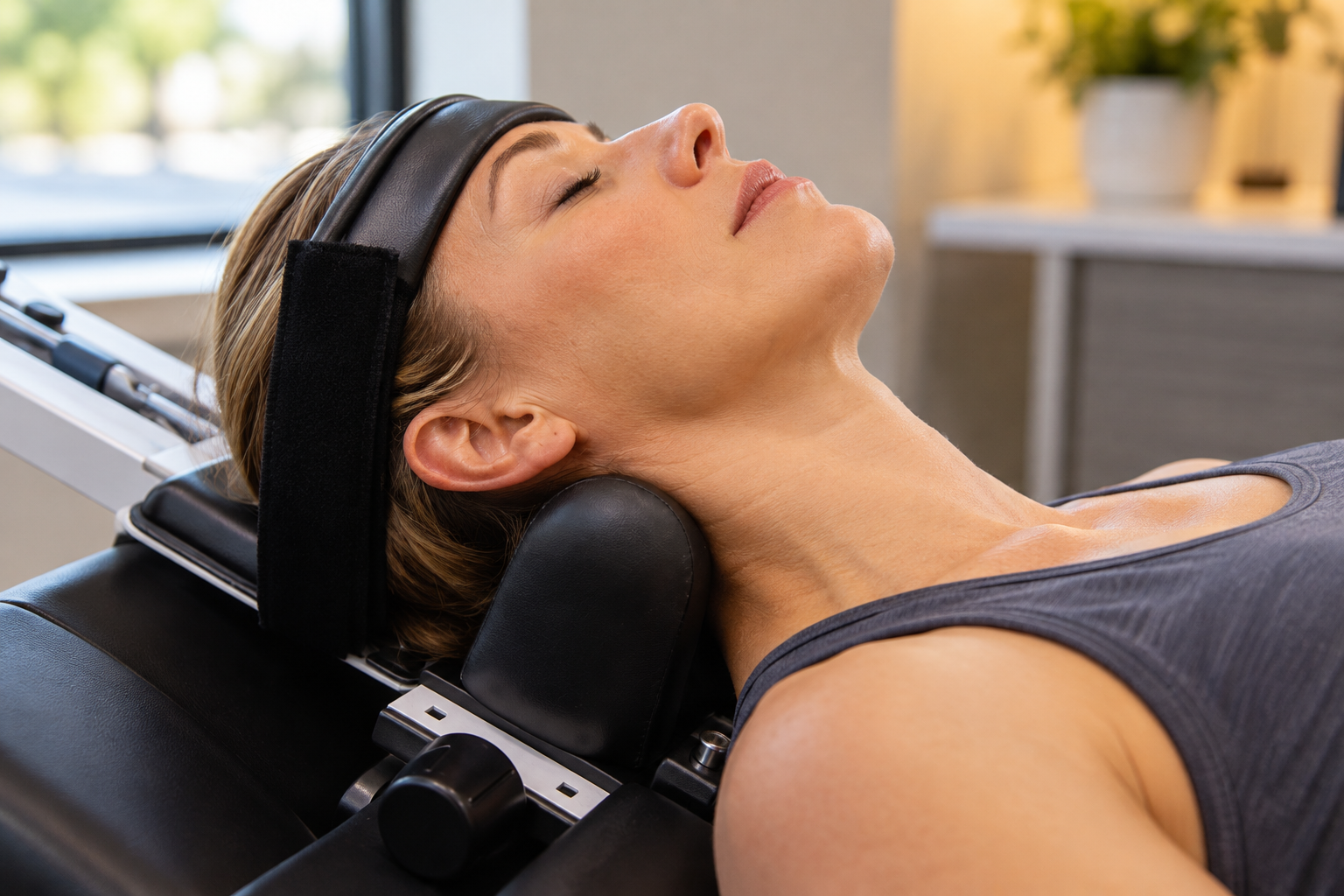
During treatment, a patient is positioned on a specialized table while controlled traction is applied. The goal is to create a carefully controlled change in spinal loading while allowing the patient to remain comfortable.
At First Stop Chiropractic, spinal decompression is offered as one of the clinic’s treatment options for patients experiencing certain types of chronic spinal pain. You can learn more about the clinic’s spinal decompression service and other available services.
Spinal decompression is related to cervical traction. Cleveland Clinic explains that cervical traction gently pulls on the head to create space between cervical vertebrae and may help reduce pressure and tension in some situations.
The cervical spine contains seven vertebrae separated by discs that help cushion the spine. Injury, repetitive stress, and age-related changes can affect these structures and may contribute to pain or restricted movement.
Spinal decompression may be used with the goal of reducing mechanical stress on the cervical spine.
Depending on the individual’s condition, potential goals may include:
Supporting comfortable neck movement
Reducing mechanical pressure around affected spinal structures
Improving mobility
Reducing stiffness
Supporting spinal function
Helping patients participate more comfortably in daily activities
Cervical traction may help some people experience less neck pain and stiffness and improved range of motion. However, research does not show that traction works for everyone, and long-term benefits can vary.
For this reason, spinal decompression should be viewed as one possible part of a broader treatment plan rather than a guaranteed solution.
One reason people may consider spinal decompression is when neck pain is associated with problems involving the cervical discs.
The discs between the vertebrae help absorb forces and support movement. With aging, injury, or repeated stress, discs can develop changes that may contribute to discomfort.
A bulging or herniated disc can sometimes irritate a nearby nerve. When this occurs, symptoms may extend beyond the neck.
A person may experience:
Shoulder pain
Arm pain
Tingling
Numbness
Burning sensations
Weakness in the arm or hand
Disc problems and bone spurs in the neck can sometimes compress nearby nerves and cause pain that travels into the arms.
Spinal decompression may be considered for some patients with disc-related symptoms, but an appropriate evaluation is necessary before beginning treatment.
Chronic neck pain can develop from many different factors.
Poor Posture
Long periods of computer work, smartphone use, or sitting can place additional stress on the neck and upper back.
Muscle Strain
Repetitive movements, lifting, exercise, or remaining in one position for too long can strain muscles supporting the neck.
Injuries
Whiplash, falls, sports injuries, and other accidents can affect the muscles, ligaments, joints, and discs of the cervical spine.
Arthritis and Degenerative Changes
The joints and discs of the neck naturally change with age. Arthritis and other degenerative changes may contribute to stiffness and discomfort.
Disc Problems
Bulging or herniated discs may sometimes irritate nearby nerves and cause neck or arm symptoms.
Stress
Stress can cause people to tighten their neck and shoulder muscles, which may contribute to discomfort.
Because there are many possible causes, persistent neck pain should be evaluated rather than assumed to have a single cause.
The exact experience depends on the treatment plan and equipment being used.
Generally, the patient lies comfortably on a specialized table. The cervical area is positioned appropriately, and controlled traction or decompression is applied.
The treatment is intended to be gentle and controlled rather than forceful. Patients should communicate with their provider if they experience significant or unusual discomfort.
Treatment frequency varies from person to person. The number of sessions recommended may depend on the patient’s symptoms, condition, response to treatment, and individual goals.
Spinal decompression is designed to be a non-invasive and generally comfortable treatment.
Some patients may notice a gentle stretching or pulling sensation. Significant pain should not simply be ignored.
If unusual pain, increasing numbness, dizziness, weakness, or other concerning symptoms occur during treatment, the provider should be notified.
Discuss cervical traction with a healthcare professional before using traction devices, especially for home use.
One potential benefit of spinal decompression is that it does not involve an incision or surgical procedure.
This may appeal to people who want to explore conservative care before considering more invasive treatment.
However, non-surgical treatment is not appropriate for every condition. Some patients may require medical management, injections, surgery, or another specialized approach.
The most appropriate treatment depends on the cause, severity, medical history, and symptoms.
Spinal decompression may be combined with other conservative strategies depending on an individual’s needs.
These may include:
Chiropractic care
Stretching
Strengthening exercises
Posture correction
Mobility exercises
Soft-tissue techniques
Ergonomic changes
Lifestyle recommendations
Regular movement can help support strength and mobility. People who sit for long periods may benefit from taking frequent breaks and changing positions throughout the day.
Posture can influence how the neck and upper back are loaded throughout the day.
When the head stays forward for long periods, the muscles around the neck may have to work harder to support it.
Helpful habits include:
Keep your computer monitor near eye level.
Avoid holding your phone low for extended periods.
Take regular breaks from sitting.
Keep your shoulders relaxed.
Adjust your chair and workstation.
Change positions instead of remaining still for hours.
Maintain good posture, adjust workstations, take breaks, and avoid prolonged positions that strain the neck.
Persistent neck pain deserves professional attention, particularly when it affects daily activities.
Consider scheduling an evaluation if:
Neck pain persists despite rest
Pain interferes with daily activities
Neck movement becomes limited
Pain travels into the shoulder or arm
You experience recurring headaches with neck pain
You notice tingling or numbness
You have difficulty performing normal activities
Seek medical care when neck pain does not improve or occurs with symptoms such as numbness, weakness, or tingling.
Most neck pain is not an emergency, but certain symptoms require prompt medical evaluation.
Seek urgent medical care if neck pain occurs with:
Significant weakness
Loss of coordination
Severe numbness
Difficulty walking
Loss of bladder or bowel control
Severe headache
Fever
Confusion
Difficulty speaking
Neck pain following a serious injury
Severe neck pain following a significant injury or neck pain accompanied by neurological symptoms should not be treated solely with spinal decompression or chiropractic care.
1. Can spinal decompression help chronic neck pain?
Spinal decompression may help some people with certain types of chronic neck pain, particularly when symptoms are associated with spinal or disc-related problems. Results vary.
2. Is spinal decompression non-surgical?
Yes. Spinal decompression is a non-invasive approach that does not require an incision.
3. Can spinal decompression help a bulging disc?
It may be considered as part of conservative care for some patients with disc-related symptoms. An evaluation is necessary to determine whether it is appropriate.
4. Can neck pain cause arm pain?
Yes. Irritation or compression of nerves in the cervical spine can sometimes cause pain, tingling, numbness, or weakness extending into the arm.
5. How many sessions will I need?
There is no universal treatment schedule. Frequency depends on the individual’s condition, symptoms, response to care, and goals.
6. Is spinal decompression painful?
Treatment is designed to be gentle and controlled. Patients may feel a mild stretching sensation, but significant discomfort should be reported.
7. Can chiropractic care and spinal decompression be combined?
Depending on the patient’s condition, these approaches may be incorporated into a broader conservative care plan.
8. Does First Stop Chiropractic offer spinal decompression?
Yes. First Stop Chiropractic offers spinal decompression in Fenton, Missouri. Visit the clinic’s spinal decompression page to learn more.
9. Can exercise help chronic neck pain?
Appropriate stretching, strengthening, and mobility exercises may support neck function and overall physical health.
10. When should I see a healthcare professional?
If neck pain persists, repeatedly returns, interferes with daily activities, or occurs with numbness, weakness, or radiating pain, professional evaluation is recommended.
First Stop Chiropractic provides chiropractic and wellness services in Fenton, Missouri. The clinic focuses on personalized care based on each patient’s symptoms, needs, and health goals.
Learn more about the clinic through the About Us page.
You can also visit the First Stop Chiropractic blog for additional educational information about chiropractic care, spinal health, pain management, and wellness.
To learn more about the conditions the clinic addresses, visit Conditions We Treat.
Chronic neck pain can affect work, exercise, driving, sleep, and everyday movement. Because neck pain can have many causes, identifying the factors contributing to your symptoms is an important step toward choosing appropriate care.
Spinal decompression is one non-surgical option that may be appropriate for certain people with chronic neck pain, particularly when symptoms are associated with spinal or disc-related problems. Cervical traction may help some people experience improvements in pain, stiffness, and range of motion, although results vary.
A comprehensive approach may also include chiropractic care, exercise, stretching, posture improvements, ergonomic changes, and lifestyle recommendations.
If your neck pain is persistent or accompanied by arm pain, numbness, weakness, difficulty walking, or other concerning symptoms, seek an appropriate professional evaluation before beginning treatment.
If chronic neck pain is affecting your comfort, mobility, or daily activities, First Stop Chiropractic can help you explore personalized treatment options.
Learn more about Spinal Decompression at First Stop Chiropractic or explore the clinic’s services.
You can also contact First Stop Chiropractic to discuss your symptoms and schedule an appointment.
First Stop Chiropractic
📍 Address: 36 Fenton Plaza, Fenton, MO 63026 United States
📞 Phone Number: (314) 574-1907
🌐 Website: https://firststopchiropractic.com
