
Back pain and neck pain can affect nearly every aspect of daily life. From getting out of bed in the morning to working, exercising, driving, and spending time with family, persistent spinal discomfort can make even simple tasks feel challenging. Many people struggling with chronic pain want relief without relying on medications or undergoing invasive surgical procedures.
One treatment option that has gained attention for its non-surgical approach is spinal decompression therapy. At First Stop Chiropractic in Fenton, Missouri, spinal decompression is offered using advanced SpineMED® technology designed to help reduce pressure on spinal discs and nerves while supporting the body’s natural healing process. According to the clinic, SpineMED® is a computerized, non-surgical spinal decompression system intended to help patients experiencing chronic neck pain, lower back pain, herniated discs, sciatica, spinal stenosis, and other related conditions.
If your chiropractor has recommended spinal decompression therapy, you may be wondering exactly what happens during treatment sessions, how long they last, whether the procedure is comfortable, and what results you can expect.
This guide explains what patients typically experience before, during, and after spinal decompression treatment sessions.
Before discussing treatment sessions, it is helpful to understand what spinal decompression therapy actually is.
According to WebMD, spinal decompression is a non-surgical treatment that uses controlled stretching of the spine to reduce pressure on spinal discs and nerves. The therapy aims to create space between vertebrae, helping decrease compression that may contribute to pain, stiffness, numbness, tingling, and reduced mobility.
The spinal discs act as cushions between the vertebrae. Over time, age, repetitive stress, injuries, poor posture, or degenerative changes can place excessive pressure on these discs.
When this happens, patients may develop:
Herniated discs
Bulging discs
Degenerative disc disease
Chronic neck pain
Chronic low back pain
Pinched nerves
Spinal stenosis
Radiating arm or leg pain
Spinal decompression works by gently stretching targeted areas of the spine in a controlled manner. This process may help reduce pressure on affected structures and improve the movement of fluids and nutrients within spinal tissues.
At First Stop Chiropractic, SpineMED® decompression therapy is often recommended for patients experiencing various spinal conditions. The clinic specifically notes treatment for:
Herniated discs
Bulging discs
Sciatica
Posterior facet syndrome
Arm numbness and tingling
Pain radiating into the legs
Disc degeneration
Spinal stenosis
These conditions often involve pressure on spinal discs or nerves, making decompression therapy a potentially valuable part of a comprehensive treatment plan.
Your first appointment is usually different from a treatment session.
Before beginning spinal decompression therapy, your chiropractor will perform an evaluation to determine whether you are a good candidate.
This assessment often includes:
Your provider will discuss:
Current symptoms
Previous injuries
Past treatments
Surgical history
Activity levels
Lifestyle factors
Understanding your history helps identify possible causes of pain and determine the most appropriate treatment approach.
Your chiropractor may evaluate:
Posture
Mobility
Range of motion
Muscle strength
Reflexes
Areas of tenderness
These findings help create an individualized treatment plan.
While spinal decompression is suitable for many patients, certain conditions may require alternative treatment options.
Your provider will explain whether spinal decompression is appropriate for your specific situation and answer any questions you may have regarding treatment.
One of the advantages of spinal decompression therapy is that preparation is minimal.
Patients are generally encouraged to:
Wear comfortable clothing
Stay hydrated
Arrive a few minutes early
Inform staff of any symptom changes
Unlike surgery, there is no anesthesia, fasting, or extensive preparation required.
Many patients appreciate how straightforward the process is compared to more invasive treatment options.
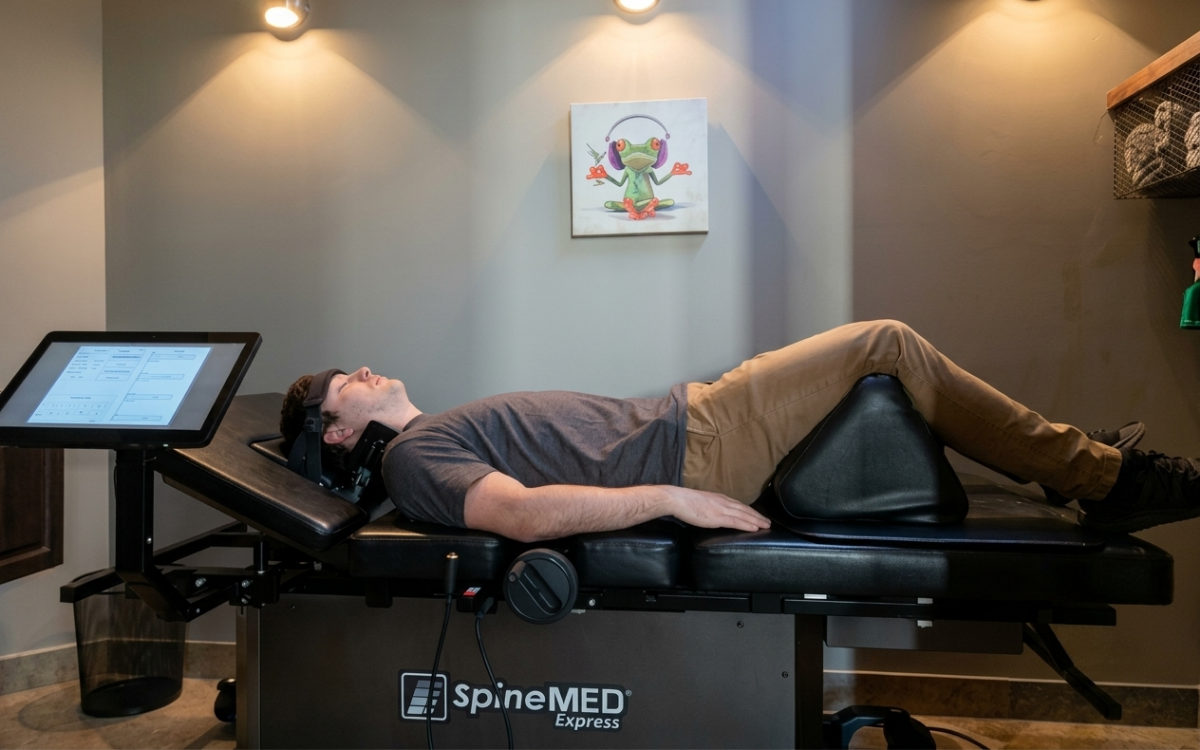
Many first-time patients are surprised by how comfortable the treatment equipment appears.
According to First Stop Chiropractic, the SpineMED® system consists of:
A specialized treatment table
Gentle restraint mechanisms
A pelvic tilt system
Computerized controls
The advanced technology continuously monitors treatment parameters and can respond to muscle tension or spasms that may occur during a session.
The system is designed to provide targeted decompression while maintaining patient comfort.
When treatment begins, a staff member will help position you properly on the decompression table.
Depending on the condition being treated, you may lie:
On your back
On your stomach
The treatment area determines the positioning used.
Comfortable harnesses are then secured around specific areas of the body. These harnesses allow the equipment to apply precise decompression forces while keeping you safely positioned throughout the session.
Most patients find the setup process quick and simple.
Once treatment begins, the SpineMED® system gradually applies controlled stretching forces to the targeted area of the spine.
The process is carefully programmed based on:
Your diagnosis
Body size
Treatment goals
Provider recommendations
The decompression occurs gradually rather than suddenly.
Patients typically experience:
Gentle pulling sensations
Mild stretching
Relaxation
The treatment should not be painful.
Many patients describe the experience as similar to a controlled stretch that relieves tension in the spine.
According to First Stop Chiropractic, the system is designed to respond quickly to muscle spasms during treatment, helping maintain patient comfort throughout the session.
Treatment length varies depending on the patient’s condition and treatment plan.
Many decompression sessions last approximately 20 to 45 minutes.
During this time, the equipment performs cycles of decompression and relaxation.
The repetitive pattern allows spinal tissues to gradually respond to treatment without excessive stress.
Your chiropractor will determine the ideal treatment duration for your specific needs.
One of the most common questions patients ask is whether decompression therapy hurts.
Most patients report that treatment is comfortable.
The stretching sensation is generally gentle and controlled.
Some patients even find sessions relaxing enough to:
Listen to music
Watch television
Rest quietly
Take a nap
First Stop Chiropractic notes that patients can enjoy entertainment or relaxation during treatment sessions, creating a comfortable experience while therapy is being performed.
If discomfort occurs at any point, your provider can make adjustments to improve comfort.
Understanding why decompression therapy works can help patients feel more confident about treatment.
When vertebrae are compressed together, pressure increases within the spinal discs.
This pressure can contribute to:
Disc bulging
Disc herniation
Nerve irritation
Reduced nutrient flow
Spinal decompression aims to create negative pressure within the affected disc spaces.
This process may help:
Reduce pressure on nerves
Improve circulation
Encourage movement of nutrients into spinal tissues
Support disc hydration
The goal is to create an environment that supports natural healing and improved spinal function.
Every patient responds differently.
Some individuals notice changes after only a few visits, while others require more time.
During early sessions, patients may experience:
The gentle stretching often provides temporary relief from muscle tension.
Some patients report feeling less compressed or stiff immediately following treatment.
Movement may feel easier after decompression sessions.
Mild soreness can occasionally occur as tissues adapt to treatment.
This soreness is generally temporary and resolves quickly.
Following treatment, most patients can resume normal daily activities.
Unlike surgery, spinal decompression typically does not require recovery time.
Patients are often encouraged to:
Stay hydrated
Continue recommended exercises
Practice good posture
Avoid heavy lifting
Follow provider instructions
First Stop Chiropractic advises patients to avoid activities that may aggravate symptoms during the treatment process.
Spinal decompression is not typically a one-visit solution.
Most chronic spinal conditions develop over time.
Because of this, successful treatment often requires a series of sessions.
According to First Stop Chiropractic, treatment plans commonly involve approximately 25 to 30 sessions depending on the severity of the condition and individual response to care.
Each session builds upon previous treatments, creating cumulative benefits over time.
Consistency is often one of the most important factors influencing outcomes.
Spinal decompression frequently works best when integrated into a broader treatment plan.
First Stop Chiropractic offers multiple services that may complement decompression therapy, including:
Chiropractic adjustments
Laser therapy
Shockwave therapy
Neuropathy treatment
Wellness-focused care
A comprehensive approach can help address both the symptoms and underlying factors contributing to spinal dysfunction.
As treatment progresses, patients may notice:
Reduced pain intensity
Improved flexibility
Better posture
Less numbness or tingling
Improved walking tolerance
Easier daily movement
Better sleep quality
Improvement may occur gradually rather than all at once.
Tracking symptoms throughout treatment can help patients recognize progress that may otherwise go unnoticed.
Once symptoms improve, maintaining spinal health becomes important.
Your chiropractor may recommend:
Movement helps support spinal stability and flexibility.
Consistent stretching may reduce tension and improve mobility.
Proper workstation setup can reduce spinal stress.
Better posture can help prevent recurrence of symptoms.
Ongoing care may support long-term spinal health and wellness goals.
At First Stop Chiropractic, the emphasis is not only on pain relief but also on helping patients maintain long-term function and quality of life.
Most patients describe the procedure as comfortable and relaxing.
Many patients seek decompression specifically because it offers a conservative, non-surgical option.
Spinal conditions often require a series of treatments for meaningful improvement.
Treatment plans are customized based on individual needs and diagnoses.
How long does a spinal decompression session take?
Most sessions last approximately 20 to 45 minutes depending on the treatment plan and condition being addressed.
Is spinal decompression safe?
For properly selected candidates, spinal decompression is generally considered a safe, non-invasive treatment option. Your chiropractor will determine whether it is appropriate for your condition.
How many sessions will I need?
Many treatment plans involve approximately 25 to 30 sessions, although the exact number varies based on symptom severity and individual response.
Can spinal decompression help sciatica?
Yes. Sciatica is one of the conditions commonly treated with spinal decompression because the therapy may help reduce pressure affecting spinal nerves.
Will I need to take time off work?
Most patients can return to normal daily activities immediately following treatment.
Can spinal decompression be combined with chiropractic adjustments?
Yes. Many chiropractors incorporate spinal decompression alongside chiropractic adjustments and other therapies as part of a comprehensive treatment plan.
What should I wear to treatment?
Comfortable clothing that allows easy movement is typically recommended.
When will I notice results?
Some patients notice improvements within a few sessions, while others experience more gradual changes over the course of treatment.
Spinal decompression therapy offers a non-surgical, comfortable, and patient-focused approach for individuals struggling with chronic neck pain, lower back pain, herniated discs, sciatica, and other spinal conditions. Using advanced SpineMED® technology, First Stop Chiropractic provides targeted decompression designed to reduce pressure on spinal structures while supporting natural healing processes. Throughout treatment, patients can expect a gentle experience that prioritizes comfort, individualized care, and long-term wellness goals.
Understanding what happens during spinal decompression sessions can help reduce uncertainty and allow patients to feel more confident as they begin treatment. While results vary from person to person, many individuals appreciate the combination of comfort, convenience, and conservative care that spinal decompression provides.
If chronic back pain, neck pain, sciatica, or disc-related symptoms are affecting your quality of life, the team at First Stop Chiropractic is ready to help.
📍 Address: 36 Fenton Plaza, Fenton, MO 63026 United States
📞 Phone Number: (314) 574-1907
🌐 Website: firststopchiropractic.com
Schedule a consultation today to learn whether SpineMED® spinal decompression therapy may be the right solution for your needs and take the next step toward improved comfort, mobility, and overall wellness.
