
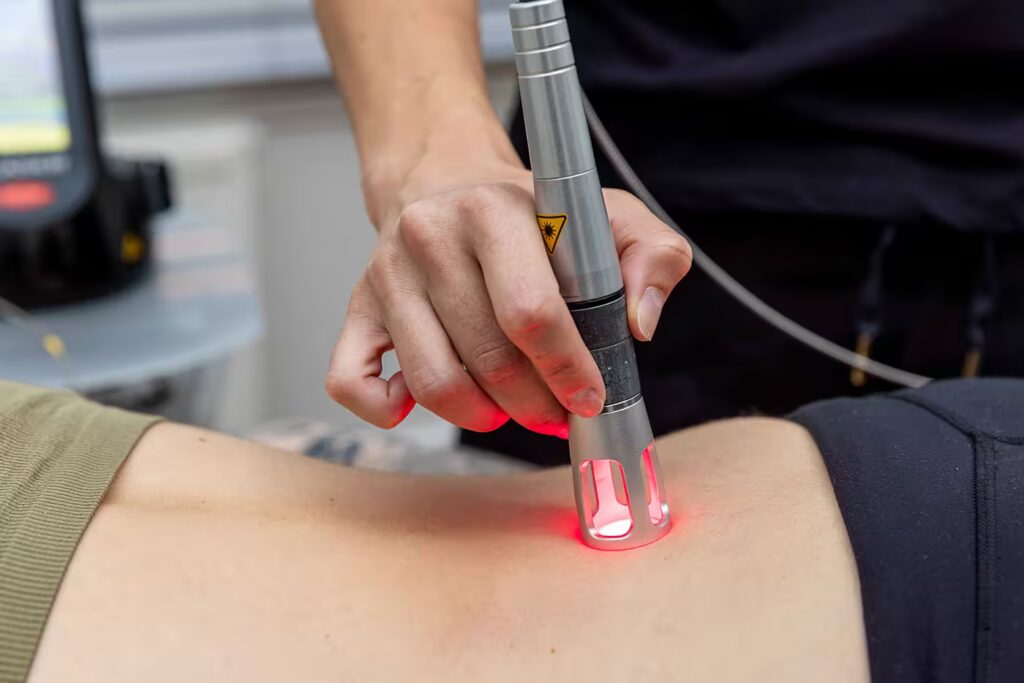
Laser therapy has become one of the most talked-about advancements in modern rehabilitative and chiropractic care. Patients who once faced long recovery periods, invasive procedures, or reliance on pain medication now have access to a safe, non-invasive option that works with the body’s natural biology.
This treatment—also known as low-level laser therapy (LLLT) or photobiomodulation (PBM)—uses specific wavelengths of light to stimulate healing at the cellular level. Unlike surgery or medication that often focuses on managing symptoms, laser therapy aims to activate the body’s own repair mechanisms, helping tissues heal faster, inflammation decrease, and pain reduce naturally.
For people dealing with injuries, chronic pain, or mobility issues, laser therapy offers something powerful: real healing without downtime.
At first glance, laser therapy might seem simple—just light applied to the body. But underneath that simplicity is a complex biological process that influences how cells function, repair, and regenerate.
Laser therapy uses concentrated light energy delivered in specific wavelengths, usually in the red or near-infrared spectrum. These wavelengths are carefully chosen because they can penetrate skin, muscle, and even bone to reach damaged tissues.
Once the light reaches the target area, it is absorbed by the mitochondria inside cells. Mitochondria are often called the “power plants” of the cell because they produce adenosine triphosphate (ATP)—the energy source required for all cellular activity.
When laser light stimulates mitochondria:
ATP production increases
Cellular metabolism speeds up
Tissue repair processes become more efficient
Damaged cells recover faster or are replaced more effectively
This is the foundation of photobiomodulation: light energy becomes biological energy.
Laser therapy works by interacting with multiple biological systems simultaneously, rather than focusing on a single symptom or isolated area of pain. When targeted light energy is applied to damaged tissue, it stimulates cellular activity at the mitochondrial level, increasing energy production and enhancing the body’s natural repair processes. This leads to improved circulation, reduced inflammation, and faster tissue regeneration. At the same time, it can help regulate nerve signaling and decrease pain sensitivity. By improving overall cellular function, laser therapy supports the body’s ability to heal more efficiently and effectively, addressing the root cause of discomfort instead of just symptoms.
ATP is essential for healing. When tissue is injured, cells require significantly more energy to repair damage. Laser therapy enhances mitochondrial efficiency, allowing cells to produce more ATP and accelerate the healing process.
Inflammation is a natural response to injury, but chronic inflammation becomes a major barrier to healing.
Laser therapy helps by:
Reducing pro-inflammatory cytokines
Increasing anti-inflammatory mediators
Decreasing swelling in injured tissues
Improving lymphatic drainage
This creates an environment where healing can happen more efficiently and with less pain.
One of the key benefits of laser therapy is improved microcirculation. Increased blood flow means:
More oxygen delivered to damaged tissue
Faster removal of waste products
Enhanced nutrient transport
Faster tissue regeneration
Better circulation is one of the reasons patients often report feeling improvement even after the first few sessions.
Laser therapy also affects the nervous system. It can:
Reduce nerve sensitivity
Calm overactive pain signals
Support nerve regeneration
Improve communication between nerves and muscles
This is especially beneficial for conditions like sciatica, neuropathy, and chronic nerve irritation.
Collagen is the structural protein that makes up skin, tendons, ligaments, and connective tissue.
Laser therapy stimulates fibroblasts, the cells responsible for collagen production. This leads to:
Faster wound healing
Stronger repaired tissue
Reduced scar tissue formation
Improved flexibility in healed areas
Not all lasers are the same, especially in healthcare, where different types are selected based on specific treatment goals and patient needs. Some lasers are designed for low-level stimulation, focusing on reducing inflammation, relieving pain, and promoting cellular repair without causing heat or discomfort. Others use higher intensities to penetrate deeper tissues, making them more effective for severe injuries or chronic musculoskeletal conditions. The choice of laser depends on factors such as the depth of the injury, severity of symptoms, and desired healing outcome. This customization allows practitioners to deliver targeted, effective care that supports optimal recovery and tissue healing.
Low-Level Laser Therapy (LLLT)
Uses low-intensity light
Focuses on cellular stimulation
Ideal for inflammation and chronic pain
High-Intensity Laser Therapy (HILT)
Deeper tissue penetration
Stronger energy output
Used for severe injuries or deep musculoskeletal pain
Both types are non-invasive and painless, but the intensity and depth of treatment differ.
Traditional treatments like surgery or injections often require recovery periods and can come with a range of risks that patients need to consider. Surgery involves cutting into tissue, which can lead to infection, scarring, bleeding, and extended healing time before normal activities can resume. Injections, while less invasive, may still cause side effects such as pain at the injection site, temporary flare-ups, or unwanted reactions to medications. Both approaches may also require downtime and follow-up care. Because of these factors, many patients look for non-invasive alternatives that support healing while minimizing risks, discomfort, and disruption to daily life.
Laser therapy avoids these issues entirely because:
No incisions are made
No drugs are introduced into the body
No tissue is removed or altered surgically
The body heals naturally after stimulation
Patients typically:
Walk in for treatment
Receive a 5–15 minute session
Walk out and resume normal activities immediately
This makes laser therapy especially appealing for people with busy lifestyles or those who cannot afford downtime.
Laser therapy is widely used in chiropractic and rehabilitative care because it supports healing across many different conditions affecting muscles, joints, nerves, and soft tissues. It helps reduce inflammation, improve blood circulation, and stimulate cellular repair, which are all essential for recovery. Chiropractors often use it alongside adjustments and physical therapy to enhance overall results and speed up healing. Because it is non-invasive and drug-free, it is suitable for patients dealing with both acute injuries and chronic pain conditions. This versatility makes laser therapy a valuable tool in modern rehabilitation, helping patients restore mobility and function more efficiently.
Musculoskeletal Conditions
Lower back pain
Neck stiffness
Shoulder injuries
Knee degeneration
Arthritis pain
Soft Tissue Injuries
Muscle strains
Ligament sprains
Tendonitis
Overuse injuries
Nerve Conditions
Sciatica
Peripheral neuropathy
Pinched nerves
Carpal tunnel syndrome
Post-Injury and Post-Surgical Recovery
Reduced swelling
Faster wound healing
Scar tissue softening
Improved mobility after surgery
Every patient is different, but a typical treatment plan includes a personalized evaluation, targeted treatment sessions, and ongoing progress monitoring to ensure effective healing. First, the practitioner assesses the patient’s condition, pain level, and medical history to determine the appropriate approach. Then, laser therapy sessions are scheduled, usually lasting a few minutes and focusing on the affected areas to stimulate tissue repair and reduce inflammation. Treatment frequency may vary depending on whether the condition is acute or chronic. Finally, progress is regularly reviewed and adjustments are made as needed to optimize results, restore function, and support long-term recovery and pain relief.
Initial Evaluation
A chiropractor evaluates:
Pain location
Severity of symptoms
Range of motion
Medical history
Treatment Sessions
Sessions usually last 5–20 minutes
Laser is applied directly to the affected area
Multiple points may be treated in one session
Frequency
Acute injuries: 2–3 times per week initially
Chronic conditions: 1–2 times per week over several weeks
Maintenance: as needed
Progress Monitoring
Improvement is tracked through:
Pain reduction
Increased mobility
Functional improvements in daily activities
Results vary depending on the condition:
Mild injuries: improvement within 1–3 sessions
Moderate chronic pain: noticeable changes within 2–4 weeks
Long-term conditions: gradual improvement over several weeks to months
The key factor is consistency. Laser therapy works cumulatively—each session builds on the previous one.
Laser therapy is considered extremely safe when performed by trained professionals because it uses controlled wavelengths of light that do not cut, burn, or damage surrounding tissue. Unlike invasive procedures, it does not involve incisions, anesthesia, or medications, which significantly reduces the risk of complications. When properly administered, side effects are rare and typically mild, such as slight warmth or temporary redness in the treated area. Safety protocols, correct dosage, and appropriate patient assessment are essential to ensure optimal results. This makes laser therapy a reliable option for many patients seeking effective pain relief and healing with minimal risk.
Advantages:
Non-invasive
Drug-free
Painless
No known long-term side effects
Possible mild effects:
Temporary warmth in treated area
Slight redness
Mild fatigue after deep tissue treatment (rare)
Contraindications:
Direct application over cancerous tumors (without medical clearance)
Pregnancy over abdominal area (precautionary)
Certain light-sensitive conditions
Medication
Masks symptoms
May cause side effects or dependency
Does not repair tissue
Surgery
Invasive
Requires downtime and recovery
Higher risk of complications
Laser Therapy
Stimulates natural healing
No downtime
Minimal risk
Addresses root cause of pain
This is why many patients choose laser therapy as part of a long-term wellness plan instead of a temporary fix.
Most patients describe laser therapy as:
Comfortable
Relaxing
Quick
Surprisingly effective over time
There is no sensation of heat or pain in most cases. Instead, patients often notice gradual improvement in movement and pain levels over several visits.
Chiropractors integrate laser therapy because it complements spinal adjustments and physical rehabilitation by enhancing the body’s natural healing response. While adjustments help restore proper alignment and improve joint function, laser therapy works at the cellular level to reduce inflammation, relieve pain, and accelerate tissue repair. When used together, these treatments create a more comprehensive approach that addresses both structural and biological aspects of healing. This combination can improve mobility, shorten recovery time, and support longer-lasting results. By pairing therapies, chiropractors are able to provide more effective, well-rounded care tailored to each patient’s specific condition and recovery goals.
Together, they:
Restore alignment
Reduce inflammation
Improve nerve communication
Speed up tissue recovery
This combination often leads to faster and more sustainable results compared to using one treatment alone.
1. Is laser therapy safe for everyone?
Yes, it is generally safe for most people when administered by a trained professional.
2. Does laser therapy hurt?
No, treatments are painless. Most patients feel nothing or a mild warming sensation.
3. How many sessions will I need?
It depends on your condition. Some patients improve in a few sessions, while chronic issues may require ongoing care.
4. Can laser therapy replace surgery?
In some cases, it can reduce or eliminate the need for surgery, but it depends on the severity of the condition.
5. How long do results last?
Results can be long-lasting, especially when combined with lifestyle changes and physical therapy.
6. Is there any downtime?
No downtime is required. You can resume normal activities immediately.
7. Can it be combined with other treatments?
Yes, it is often used alongside chiropractic care, massage therapy, and rehabilitation exercises.
Laser therapy represents a major advancement in non-invasive healthcare. By using targeted light energy to stimulate cellular repair, it helps the body heal itself faster and more efficiently than many traditional approaches.
Instead of masking pain, it addresses the underlying causes—reducing inflammation, improving circulation, and enhancing tissue regeneration. Most importantly, it does all this without surgery, medication dependency, or downtime.
For individuals dealing with pain, injury, or chronic conditions, laser therapy offers a safe, effective, and modern path toward recovery and long-term wellness.
If you are ready to experience natural healing, reduced pain, and improved mobility without surgery or downtime, laser therapy may be the solution you’ve been looking for.
Schedule a consultation today and take the first step toward faster recovery and better quality of life.
📍 Address: 36 Fenton Plaza, Fenton, MO 63026, United States
📞 Phone Numbers:
Main Line: (314) 574-1907
Alternate Line: (314) 750-7361
🌐 Website: https://firststopchiropractic.com
